110knots.comPilot Life2023-11-25T04:04:08Zhttps://110knots.com/feed/atom/WordPresshttps://i0.wp.com/110knots.com/wp-content/uploads/2020/04/cropped-pilot.png?fit=32%2C32&ssl=1Mike Bennett<![CDATA[Aircraft Required Maintenance Inspections – Acronym: AAV1ATE]]>https://110knots.com/?p=11102023-11-25T04:04:08Z2023-11-24T21:12:42ZAs you may have noticed, the Airworthiness Certificate in your airplane never expires, you can think of that document like a birth certificate for the airplane. It just states that the airplane was once Airworthy. It is (or will be) YOUR JOB as the pilot in command to confirm that the airplane is airworthy.
]]>As you may have noticed, the Airworthiness Certificate in your airplane never expires, you can think of that document like a birth certificate for the airplane. It just states that the airplane was once Airworthy. It is (or will be) YOUR JOB as the pilot in command to confirm that the airplane is airworthy.
Hum, I though that was the airplane owner’s job? NO, just like if I let you borrow my car with expired insurance, registration and a missing headlight, who get’s the ticket? You do.. Once you take possession of the airplane and determine it is safe to fly, that’s on you…
What about the Airplane Mechanic, it’s this his / her job to make sure the airplane is safe? Yes and no, if the A&P signed the airplane off for return to service, they are simply saying that it looked good when they looked at it on that date, if someone drove a lawnmower into it or shot the prop with a gun (yes, that’s happened twice to people I know) the airplane isn’t Airworthy anymore, and you might want to call the cops..
My flight school says that I can’t look at the Airplane Logbooks… Get a new flight school.. NOW.
A word of caution, especially to instructors. If a student want’s to fly their airplane vs the flight School airplane, make sure their airplane is legal to fly. I’ve caught two unairworthy airplanes in the past 6 months while conducting record reviews.
Airworthiness Directives 91.417(a)(2)(v)
Notifies aircraft owners and other interested persons of unsafe conditions and to specify the conditions under which the product may continue to be operated. They could be either one-time or recurring ADs.
Annual Inspection 91.409
Every 12 calendar months. Can only be performed by an IAP (Inspection Authorized) mechanic. It also can substitute a 100-hr inspection.
VOR 91.171
Every 30 days. Only required for IFR flights without WAAS.
100-hour Inspection 91.409
Only required if the aircraft is for hire.
An aircraft can exceed its 100hr inspection only by up to 10 hours while en-route to a place where the inspection can be done. A special flight permit is not needed to fly those 10 hours, but the time must be logged in the maintenance record and can not be added to the next inspection.. For example, if the 100 hour was due at 2344, and you overflew to 2349, the next 100 hour is still due at 2444. WATCH THIS! Check the ADs! Many come due at 100 hours and can not be overflown without a ferry permit.
If an inspection was due at 100hrs but the plane flew 105hrs before it was inspected, the next inspection will still be due at 200hrs, but now you most likely overflew the ADs. Oops!
Altimeter, altitude reporting and static system 91.411
Every 24 calendar months
Transponder 91.413
Every 24 calendar months
ELT 91.207
Every 12 calendar months
The regulation lists a lot of cases in which an ELT is not required, in which case maintenance is not required. Out of all items in that list there are two which might apply for flight training purposes:
If engaged in training operations conducted entirely within a 50-nautical mile radius of the airport from which such local flight operations began.
If temporarily removed for no more than 90 days for inspection, repair, modification, or replacement, and in its place is a placard stating the removal
]]>0Mike Bennett<![CDATA[Accident Case Study: Hazardous Attitudes]]>https://110knots.com/?p=11052023-10-20T19:48:32Z2023-10-20T19:47:57ZIt’s an overcast afternoon on February 3, 2019, when the pilot of a Cessna 414 Chancellor departs Fullerton Municipal Airport
It’s an overcast afternoon on February 3, 2019, when the pilot of a Cessna 414 Chancellor departs Fullerton Municipal Airport in California. He plans to fly VFR to Minden, Nevada, 320 nautical miles to the north.
Join the AOPA Air Safety Institute as we follow the flight that four minutes after departure encounters instrument meteorological conditions – weather air traffic control had warned the pilot about. Within another two minutes things turn from bad to ugly, in microburst conditions, turbulence, and rain showers. Learn how hazardous attitudes can betray pilots who don’t heed warnings.
]]>0Mike Bennett<![CDATA[How to pass your CFI Checkride the first time]]>https://110knots.com/?p=10942023-10-20T17:02:41Z2023-10-20T17:02:39ZSome of my lessons learned on my way to earn my CFI certificate after a two year break from flying.
]]>0Mike Bennett<![CDATA[NTSB Final Report -Truckee Challenger Crash Circle to Land]]>https://110knots.com/?p=10862023-10-20T16:27:08Z2023-10-20T16:26:16ZLocation: Truckee, California Accident Number: WPR21FA286 Date & Time: July 26, 2021, 13:18 Local Registration: N605TR Aircraft: BOMBARDIER INC CL-600-2B16
]]>0Mike Bennett<![CDATA[Comair Flight 5191 The Wrong Runway]]>https://110knots.com/?p=10302023-10-20T16:38:58Z2023-10-18T23:02:36ZOn August 27, 2006, at approximately 6:06 AM local time, Comair Flight 5191, a Bombardier CL-600-2B19, crashed during takeoff from Lexington's Blue Grass Airport (LEX), Lexington, Kentucky. All 47 passengers and two of the three crew members were killed. The first officer survived, though seriously injured.
]]>I’ve long been a junky of aviation safety videos and content. I’ve watched just about every air crash documentary and have pored thru my share of Kathryn’s Reports, NTSB reports, CVR transcripts, etc. All in the hopes that I will recognize what led up to these tragic events, so that hopefully, I’ll avoid the same mistakes.
Comair Flight 5191 strikes a special note with me as I can see just about anyone making this mistake. It was a small oversight with severer consequences. My heart goes out to the families of the soles lost and the loan survivor First Officer Jim Polehinke.
Tips to avoid this:
Before I get started on my Monday morning quarterback “here is the list of things I do” BS. Let me be clear, mistakes happen, it is our job to build protections around the mistakes so they don’t get us killed.
Brief your taxi. Know where you are going and communicate it to the crew (even your imagery friend sitting next to you.) Say it, this actually works.
Trust but verify… Cross check and verify before departing.
Set your heading bug to the assigned runway.
Lights, Camera, Action!
23 23 you’ll hear that in some of my old videos on YouTube. This was from an airline pilot buddy of mine (Heading ~230 Runway 23.)
]]>0Pete Reddanhttps://www.facebook.com/groups/2482993451737874/<![CDATA[Where Did All the Ground Training Go?]]>https://110knots.com/?p=10112023-10-10T15:32:23Z2023-10-10T03:46:32ZDoes your flight instructor provide ground training as part of your pilot training, or did he / she tell you to get an online course?
]]>The aviation training industry, in a world where some percentage of flight instructors only care about “flight time”, has a major problem no one is addressing… proper ground training! “But, what about the DPE shortage?” That is a shiny object of distraction and another article for another day. The quick and dirty on that topic is, we have an exam-scheduling problem, not a shortage of DPEs. Back to proper ground training. Proper ground training can save your life, as well as reduce liability to flight schools providing the training to their clients.
The industry’s recent failures to acknowledge proper ground training has been a slow burning fuse on a (lack of) knowledge bomb for some time. Lighting of the fuse dates back to when “Ground School”, taught by a living breathing CFI in a hangar, transitioned to VHS video tapes. As the transition continued to “Online Ground School”, a for profit business, that takes money out of your local CFI’s wallet and endures zero accountability when it comes to taking your practical exam, was born.
Two disturbing trends have developed in the aviation training industry. First, Flight Instructors are shying away from doing any ground training and allowing “online” courses to pick up the slack. You cannot ask an online course questions in real time unless there is an instructor present online to ask. With the online training programs offered you can certainly garner great knowledge. Unfortunately, the application of that knowledge is hard to come by. This is where one on one ground training with the CFI comes in. This shift has slowly occurred since the early 80’s with the invention of the VCR and has significantly accelerated with the rapid growth over the last six years in the online offerings in the aviation training industry. Second, Flight Schools and Flight Instructors are opting for more flight training in place of proper ground training. Even more disturbing, that flight training is at a level of trial and error, rather than precisely planned instruction with precisely planned expectations of outcomes.
Part 61 specifically uses two very distinct terms to address the required training prior to making application for a pilot certificate or rating, “Ground Training” and “Flight Training”. The term “Ground School” is a marketing term to generate interest in a group-learning environment specifically to prepare for the written exam. Do not get me wrong, I am not bashing any type of ground school, I actually cherish the opportunity to teach them… in person. Unfortunately, online ground schools currently teach to the rote and/or understanding level of knowledge, not the application of that knowledge. This requires human-to-human interaction with a local CFI. Online ground schools prepare you for the written test, not the ground portion of the practical test. Although the price tag of the online ground schools seems to make the cost of training a bit less expensive for the client, lately, they remove a significant and important piece of the training puzzle to becoming a competent and safe pilot. The local CFI. Thus, driving up the local flight training costs due to lack of ground training preparation.
If you read part 61.57, 105, 107, 125, 127, 129, 186, 187… every one of them states, “…must receive and log ground training…” How have we ventured so far from what is required to become a competent and safe pilot?
As you can see, the old “ground training is not required for part 61” or “not as much ground training is required for part 61” excuses are an absolute farce. Anyone spouting these rumors needs a remedial class in the FAR/AIM. Ground training is required for all parts of Part 61 training; accomplished by a current and competent CFI (preferably the recommending CFI), on the topics listed in each of the respective sections. Where the ground training is logged is optional, preferably in the applicants logbook (usually near the back part of the logbook), and that log is presented to the examiner at the time of the exam to qualify the applicant to take the exam. Unfortunately, you cannot endorse someone for an exam if there is no record of the training received for that endorsement. Specific ground and flight topics demand coverage via ground training per the regulations. A professional educator (the CFI) should be documenting that training, in detail, in the learner’s logbook or training record. Just as if it were a flight lesson. This is what your clients are paying for! Interacting with a local CFI is the only way to allow the transition to occur from rote or understanding level, to the application level of learning (yes, I said it again).
Flight Instructors, you are the front line training manager of your client’s safety and training! I am sorry to tell you, if you attended a flight school where one on one, in-person, ground training was looked down upon or seen unnecessary, your flight school failed you abysmally! Any flight school or CFI that downplays the importance of one on one, CFI to learner, ground training should be avoided at all costs. This red flag denotes a flight school that exists solely as a revenue generating business rather than an institution of higher learning with a grasp of how to achieve desired outcomes through a proper training syllabus. At these schools, there is an over reliance on “self-study” and “online” training programs. Any flight school that is making this shift (from in-person to solely on-line) is setting their clients and business up for failure. Not just bankruptcy, but a failure in safe efficient operations leading to potential incidents and accidents.
Now, let’s do the math…
75 hrs of flight training at $250/hr = $18,750
35 hrs ground training at $50/hr ($1750) + 40 hrs flight training at $250/hr ($10,000)= $11750
As you can see, proper ground training can save a significant chunk of change on your overall cost of training! Normally, proper ground training inlaid with flight training can save up to 25-33% on overall (current) costs. Flight schools, ground training can free up resources on your flight schedule saving the cost of buying another airplane for your fleet and the operating costs associated with that additional aircraft.
Like it or not, you are going to spend time with your CFI or Learner doing ground training, and I encourage you to like it. CFI’s, you are paid the same whether inflight or on the ground (or at least you should be). Regulation and ethics demand you spend time on the ground with your learner covering the required topics in Part 61 for the certificate being sought. The topics are not difficult and are easily found in the Pilots Handbook of Aeronautical Knowledge or the Airplane Flying Handbook. Yes, both books can be written better… it is what it is.
Finally, you cannot endorse someone for an exam if ground training has not been accomplished via an approved process per Part 61.
Fly safe, fly smart!
Pete
The above article was posted with permission from Vaper Global Aviation LLC.
About Vapor Global Aviation LLC
Vapor Global Aviation, LLC provides top quality flight and ground training to pilots and aircraft owners seeking to pursue continued excellence in aviation.
Established as an LLC in November of 2019 by retired Air Force Pilot, Pete Reddan, Vapor Global Aviation can provide the following ground and flight training services under Federal Aviation Regulations Part 61 and 91:
FAA Practical Exams
Spin, Upset and Recovery Training (see below) GA ASEL/AMEL Instruction
TRAINING NOW AVAILABLE
Concerned about entering a spin? Loss of Control in flight? Events occurring outside your skill set? Fear of the aviation unknown? The remedy, Vapor Global Aviation’s (VGA’s) Upset Prevention & Recovery Training (UPRT) Programs. Your instructor, US Air Force Pilot, Pete “Vapor” Reddan, Lt Col (ret). He spent nine years out of 20 teaching fellow USAF pilots aerobatics and upset recovery techniques in the T-6 Texan II and three years providing UPRT to Federal Bureau of Investigation pilots. A true spin/upset recovery specialist! VGA is currently booking UPRT single day one on one/two classes for March and early April in the greater Memphis area (M04 or KUTA). Contact us at vaporglobalaviation@gmail.com for more information. Not from Memphis, fly in, or he’ll come to you.
]]>0Mike Bennett<![CDATA[A Practical guide to GPS, WAAS, ILS and VORs]]>https://apracticalpilot.com/?p=8292020-11-09T17:59:48Z2020-11-04T19:58:15ZThe following is a free Pilot lesson on the national airspace system NAS covering VOR ILS GPS and WAAS. A
]]>The following is a free Pilot lesson on the national airspace system NAS covering VOR ILS GPS and WAAS. A perfect tool for IFR student pilots: Make sure you check out the references section at the bottom of this lesson for more information.
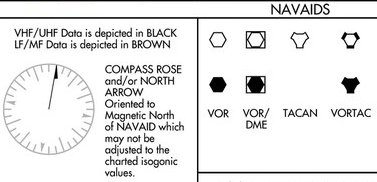
The (NAS) navigation services are based on a combination of ground-based and satellite-based services. In the future, navigation services will continue to be based on a combination of ground based and satellite based services for all phases of flight; although ground-based NAVAIDS infrastructure will be reduced (VOR MON).
VOR VHF Omni Range
Today, VORs still provide the backbone for our airway system. Although GPS is often used in place of the VORs, the FAA has committed to keeping an “operation contingency” VOR network as a failsafe in the event of a large scale GPS outage. VORs are also used to define holding points and non-precision approach procedures.
A VOR is a ground based radio NAVAID.
Requires an airborne component (the VOR receiver and a way to display the course data (CDI HSI RMI etc.).
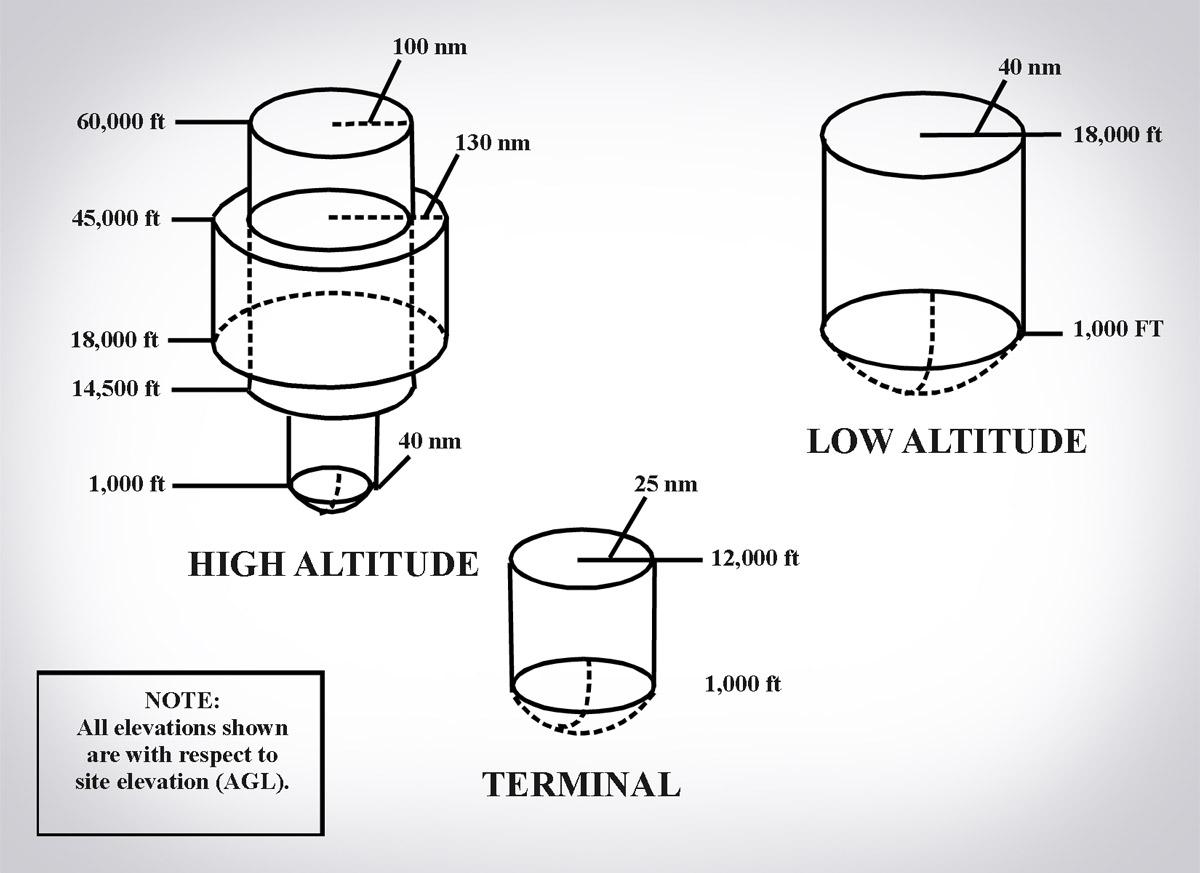
VORs operate within the 108.0 to 117.95 MHz frequency band and have a power output necessary to provide coverage within their assigned operational service volume.
DME is often combined with VOR facilities and provides “slant range” distance from the NAVAID
Most VORs have AM voice broadcast ability, each VOR has it’s own Morse code identifier that must be used to identify the station prior to using it.
Some VOR equipment decodes the identifier and displays it to the pilot for verification to charts, while other equipment simply displays the expected identifier from a database to aid in verification to the audio tones
You should be familiar with your equipment and use it appropriately
If your equipment automatically decodes the identifier, it is not necessary to listen to the audio identification
VOR receivers must be tested within 30 days prior to using them on an IFR flight.
How Does VOR Work?
VORs work on the principle of the phase difference in two radio signals.
You can get your mind around this concept by thinking of a tower with two lights on it. One light rotates at a constant rate around the tower but has a very narrow beam so that it can only be seen by the viewer just as the beam passes the viewer’s position. This is known as the (Variable Signal)
The other light flashes and can be seen in all directions (an omnidirectional light in our example), but here’s the magic, the light only “flashes” when the rotating light passes magnetic north. This is known as the (Reference signal).
So, if you know how fast the rotating light is moving, you could start a timer when the omnidirectional light flashes (reference signal), and then note the time when you see the rotating beam (variable signal.) Then, with some basic, math you’ll know your bearing from the station.
Here’s just an example so you can better understand the idea. If the light takes 60 seconds to make one rotation, let’s start our timer when we see the flash.. Wait for the light… Now STOP.. 30 seconds. So, if the flash was as the beam passed north, we know we are south of the station!
That’s how a VOR works. A rotating directional signal is broadcast from the VOR, while a second (omnidirectional) signal is broadcast only when the rotating signal passes north. The VOR receiver in your aircraft measures the time—or phase—difference in these two signals and comes up with the bearing—or radial—from the station.
VOR VHF Omni Range Standard service volumes and types of VORs.
VOR VHF Omni Range: Testing requirements
Sec. 91.171
VOR equipment check for IFR operations.
(a) No person may operate a civil aircraft under IFR using the VOR system of radio navigation unless the VOR equipment of that aircraft– (1) Is maintained, checked, and inspected under an approved procedure; or (2) Has been operationally checked within the preceding 30 days, and was found to be within the limits of the permissible indicated bearing error set forth in paragraph (b) or (c) of this section.
VOR tests:
FAA-operated or approved test signal or a test signal radiated by a certificated and appropriately rated radio repair station or, outside the United States, a test signal operated or approved by an appropriate authority to check the VOR equipment (the maximum permissible indicated bearing error is plus or minus 4 degrees);
Use, at the airport of intended departure, a point on the airport surface designated as a VOR system checkpoint by the Administrator, or, outside the United States, by an appropriate authority (the maximum permissible bearing error is plus or minus 4 degrees);
If neither a test signal nor a designated checkpoint on the surface is available, use an airborne checkpoint designated by the Administrator or, outside the United States, by an appropriate authority (the maximum permissible bearing error is plus or minus 6 degrees); or
If no check signal or point is available, while in flight– (i) Select a VOR radial that lies along the centerline of an established VOR airway; (ii) Select a prominent ground point along the selected radial preferably more than 20 nautical miles from the VOR ground facility and maneuver the aircraft directly over the point at a reasonably low altitude; and (iii) Note the VOR bearing indicated by the receiver when over the ground point (the maximum permissible variation between the published radial and the indicated bearing is 6 degrees).
(c) If dual system VOR (units independent of each other except for the antenna) is installed in the aircraft, the person checking the equipment may check one system against the other in place of the check procedures specified in paragraph (b) of this section. Both systems shall be tuned to the same VOR ground facility and note the indicated bearings to that station. The maximum permissible variation between the two indicated bearings is 4 degrees.
(d) Each person making the VOR operational check, shall enter the date, place, bearing error, and sign the aircraft log or other record. In addition, if a test signal radiated by a repair station, as specified in paragraph (b)(1) of this section, is used, an entry must be made in the aircraft log or other record by the repair station certificate holder or the certificate holder’s representative certifying to the bearing transmitted by the repair station for the check and the date of transmission.
VOR VHF Omni Range: Limitations
Line-of-Sight:
The range varies proportionally to the altitude of the receiving equipment
This means the farther from the station, the higher you must be
See Standard Service Volume (SSV) for more range restrictions
Reverse sensing:
Reverse sensing flying TO a station with a FROM indication or a FROM with a TO indication
Cone of Confusion
OBS Calibration errors
Error between radial selected and the one shown in the course selection window
Propeller Modulation: (If signal passes through prop, arc modulation can be changed CDI needle may fluctuate as much as plus or minus 6°
Tracking VORs: Wind corrections
Distance Measuring Equipment (DME)
Paired pulses at specific spacing (interrogation) are sent to a ground station from the aircraft via the antenna
The ground station (transponder) sends the same pulses back to the aircraft at a different frequency
Time it takes is interpreted as the distance, usually in Nautical Miles (NM)
Distance is measured in slant range (not horizontal range!) but some units can correct this Slant range error minimized at lower altitudes
Operates on the line-of-site principle
Reliable up to 199 NM accuracy of better than 1/2 mile or 3% of the distance, whichever is greater (more accurate)
Due to the limited number of available frequencies, assignment of paired frequencies is required for certain military non-collocated VOR and TACAN facilities which serve the same area but which may be separated by distances up to a few miles
DME paired with a VOR constitutes a VORTAC
Can be identified every 30 seconds or about every 3rd to 4th VOR identification
Required above FL 240 when VOR navigation required (under IFR) as per FAR 91.205(e)
If DME fails above FL 240, continue to next airport where repairs or equipment replacement can be done (must still report as per AIM 5-3-3)
GS values, if displayed, are only accurate when flying directly to / from the station
Service volume applies:
Note that Standard Service Volume (SSV) does not apply to airways as they’ve been certified at their respective distances
Frequency:
960 MHz to 1215 MHz in accordance with ICAO Annex 10
ILS (Instrument Landing System)
ILS components:
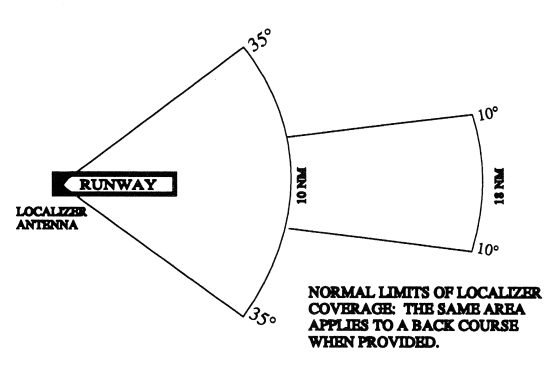
ILS (Instrument landing system): Localizer coverage area:
ILS Marker Beacons:
Approach Lighting Systems (ALS)
GPS (Global positioning system):
Nominal 24 GPS satellites in low earth orbit
Each satellite transmits data message
Airborne receiver processes message to determine position/velocity/time
Navigation function; either in FMS or in GPS (stand-alone)
Linear, not angular
GPS (Global positioning system): Space
GPS (Global positioning system): Control
Ground based monitoring stations
Master control stations
Ground antennas
Ensures accuracy of the atomic clocks
GPS (Global positioning system): User
RAIM (Receiver autonomous integrity monitoring):
Calculates your position vs. satellites to determine if sufficient for navigation
Considers known satellite failures
RAIM check for approaches (not en-route)
RAIM check is required. AC 90-100, para 8(5)
RAIM minimum of 5 satellites with satisfactory geometry
Enhanced RAIM capability called Fault Detection and Exclusion (FDE). minimum of 6 satellites
Preflight predictions ensure that sufficient satellites will be in view during the approach to enable GPS receiver equipment to perform RAIM and FDE.
WITH APPROVED GPS, I CAN:
File RNAV
Fly an LNAV approach
Fly an RNP/RNAV approach
Fly a GPS approach
…but I can’t file a GPS alternate
…and GPS is supplemental
PRIMARY OR SUPPLEMENTAL NAVIGATION?
GPS is considered supplemental
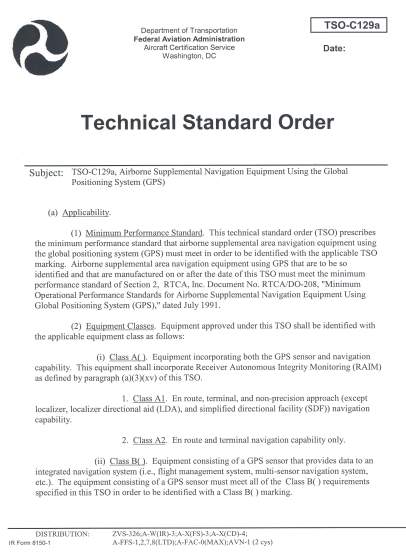
TSO C-129 “Airborne Supplemental Navigation Using GPS”
Must have equipage satisfactory for the route of flight
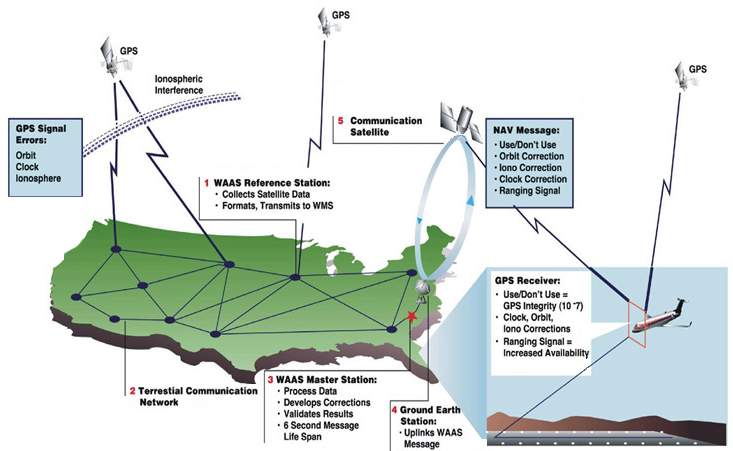
How WAAS works:
WAAS CAPABILITIES:
Why WAAS?
Enhances en-route navigation performance over GPS alone
Enhances non-precision approach capability over GPS alone
Allows WAAS equipped users to fly more than 2,891 published LNAV/VNAV procedures to minimums as low as 300 feet
Allows WAAS equipped users to fly new LPV procedures
Can use GPS for an alternate (LNAV only)
Advanced missed approach
Better than 99.99% availability of system
95% availability in CONUS of approach with vertical guidance
200’ minimum (maybe)
WAAS specific approaches (LPV)
646 LPV approaches published, with 300 new expected in 2007
WITH WAAS, I CAN:
Skip the RAIM check!
Fly an LNAV/VNAV approach
Fly an LPV approach
Use GPS/WAAS entirely
…and I can file a GPS alternate
But using the LNAV minima line
WAAS is not supplemental
TSO-C146 “Stand-Alone Airborne Nav Using GPS Augmented by WAAS)
TSO-C145 “Airborne Nav Sensors Using GPS Augmented by WAAS”
LOCALIZER PERFORMANCE WITH VERTICAL GUIDANCE (LPV)
]]>0Mike Bennett<![CDATA[IFR Holding Patterns]]>https://apracticalpilot.com/?p=7902020-11-02T18:11:33Z2020-10-28T21:35:31ZIf you are a new IFR student studying for the FAA IFR Written exam or getting ready for your check
]]>If you are a new IFR student studying for the FAA IFR Written exam or getting ready for your check ride, chances are that you’ve been stressing about holding patterns. I know I did, so here is all you need to know about holding patterns for your FAA test. At the end I provide my trick for entering the holding pattern.
Some terms to know:
Holding Pattern – the usually oval course flown by aircraft awaiting further clearance.
Hold Procedure (FAA Pilot/Controller Glossary) -a predetermined maneuver which keeps aircraft within a specified airspace while awaiting further clearance from air traffic control
Holding Fix (FAA Pilot/Controller Glossary) – a specified fix identifiable to a pilot by NAVAIDs or visual reference to the ground used as a reference point in establishing and maintaining the position of an aircraft while holding
Primary Area (the protected or holding side) provides at least 1,000 feet of obstacle clearance
Secondary Area (non holding side) provides at least 500 feet of obstacle clearance
Parallel Procedure. When approaching the holding fix from anywhere in sector (a), the parallel entry procedure would be to turn to a heading to parallel the holding course outbound on the non-holding side for one minute, turn in the direction of the holding pattern through more than 180 degrees, and return to the holding fix or intercept the holding course inbound.
Teardrop Procedure. When approaching the holding fix from anywhere in sector (b), the teardrop entry procedure would be to fly to the fix, turn outbound to a heading for a 30 degree teardrop entry within the pattern (on the holding side) for a period of one minute, then turn in the direction of the holding pattern to intercept the inbound holding course.
Direct Entry Procedure. When approaching the holding fix from anywhere in sector (c), the direct entry procedure would be to fly directly to the fix and turn to follow the holding pattern.
While other entry procedures may enable the aircraft to enter the holding pattern and remain within protected airspace, the parallel, teardrop and direct entries are the procedures for entry and holding recommended by the FAA, and were derived as part of the development of the size and shape of the obstacle protection areas for holding.
So, why do we hold?
Airplanes can’t simply stop in traffic like cars, when there are delays, ATC will instruct airplanes to hold (orbit) over defined points (NAVAID, intersection, fix) etc.
Corse reversal (you need to turn around to align with an approach).
Altitude change (climb or decent)
How fast can we fly in the holding pattern?
What about using GPS in-leu of DME?
If you even asked this question, I am impressed. “Won’t the DME be different than a GPS driven DME?” Ding Ding Ding! You got it right! Does it matter? Not really, ATC knows about this and they don’t care. Just know, your fix isn’t exactly in the same place as charted.
How to enter the hold: My trick!
So here goes, and this one is right from your IFR written exam. When it comes to holding, I had a great CFII once teach me this trick.
#1 rule. Don’t over think it. In this example I’m to hold south of the fix on the 180. For practice, take a sheet of paper and draw the hold.
To do it: 1. Center the CDI with a TO indication. 2. Turn and track towards the fix. 3. Where am I in relation to the fix? (Look at the tail of the centered CDI). Bingo. Your answer right there. I’m northwest of the fix. 4. Visualize how you are going to enter the hold. 5. Ask yourself the following questions.
When I pass the fix will I be: 1. With the hold? Direct 2. Against the hold? Parallel 3. Inside the hold. Teardrop.
Now let’s fly it:
Pass the fix.
Turn
Time
Twist (the CDI to the inbound leg) 360 in this example.
Throttle (you should be at your holding speed already)
Talk (report established in the hold)
Track (fly the hold)
Use all tools at your disposal. If you have ground track, use it. Apply wind corrections.
Time the outbound leg so the inbound leg is what you were instructed to fly.
On written exams draw the hold first.
Remember that a standard hold is to the right. How do you know the hold is standard? They didn’t say “left turns”.
]]>0Mike Bennett<![CDATA[Afraid of flying? A success story]]>https://apracticalpilot.com/?p=7472020-07-16T01:18:06Z2020-07-16T01:11:06ZAre you afraid of flying? It’s okay.. I was as well, but you can overcome it. Here’s just one example.
]]>Are you afraid of flying? It’s okay.. I was as well, but you can overcome it. Here’s just one example.
Like any CFI, I’ve run into pilots who struggled with their initial flight training. One example was Bob.. Bob was working with a colleague of mine at the academy and had struggled throughout the second phase of his Private Pilot training (solo and XC.)
My colleague had a great track record of moving students through the program in time, but he was butting heads with this particular student. The first thing my manager told me was that this student wouldn’t fly on windy days. I responded “is he afraid of flying?” After a review of his training folder, it became clear to me that he was. There was a stack of progress reports about an inch thick. “PUI nearly stalled the airplane during attempted go-around” “PUI is very rough on the controls” “PUI not responding to instructor commands, instructor had to take over controls”.
I met with Bob the next morning for his lesson. We discussed fear and how it can both help and hurt you as a pilot.
Me: “Some amount of fear is good, it will keep you alive, but too much fear will make you freeze and can hurt you.”
Me: “So, what’s the deal with not flying on windy days?”
Bob: “I don’t see the point in flying when it’s windy.”
Me: “Smooth seas make for bad sailors, seriously though; one day, on your solo, it may get windy. Wouldn’t you want to be comfortable with wind on that day?”
Me: “I was once so afraid of flying that I’d have an anxiety attack on my way to the airport. I had to fight past that fear. Do you know how I did it?”
Bob: “How?”
Me: “I flew on really windy days with my CFI.”
Our first lesson: Right after takeoff I could see that Bob was very tense. It was a smooth day in a great G1000 Cessna with light traffic. Nothing to worry about, but he was wound up tighter than a spring.
Me: “Smooth, smooth. Pretend that your mom is in the back of the airplane.” No change.
I took him to a somewhat challenging airport. Always a crosswind and trees on either end of the runway. I worked with him on his landings (but more on his fear). On our way back I asked him to demonstrate a power on stall. Bob was fighting the little cessna. Ailerons and rudders flapping away, to the stopps!
Me: “She’s a nice girl, but if you keep slapping her, she’s going to slap you back.”
Me: “Let me demonstrate.” I flew the Cessna all the way to the edge of the stall, then I turned 90 degrees in either direction. Then I stalled and recovered without losing altitude. “You see, If you fly smooth, it’s easy. Now try it.”
Bob once again overcontrolled the airplane. I decided to let him learn the err of his ways the old fashioned way.
Me: “She’s a nice girl, but if you keep slapping her she’s going to slap you back” I repeated.
WOOP. Incipient spin!
As we briefly flipped inverted, I started laughing. “OOH, she slapped you”
My point here was to show no fear. To demonstrate that there is nothing to worry about, if you remain calm.
Me: “Now fix it.” (Don’t help if you can help it. Let them build confidence)
Bob panicked and added full power…
Me: “NO, that’s not how we do it”
Second turn in the developing spin, approaching maneuver floor.
Me: in a stern voice. “What do we do?” (Still not helping.)
Bob snapped out of it and correctly followed his PARE procedure.
In an instant, the forgiving Cessna returned to normal flight.
Me: “You see, not so bad, was it?”
Bob was ready to listen to his new crazy instructor.
Eventually Bob became one of my best students and a good friend. On his first solo the winds picked up to 17 knots across the runway. It took him three attempts (two go-arounds), but he ended with a perfect crosswind landing. That was a proud moment for me. Watching him overcome his fear is one of my crowning achievements of my time as an instructor.
On his solo cross country, he ran into unforecasted pop-up thunderstorms. He solicited the help of flight service, ATC, Flight Dispatch and even sent me a text message regarding his situation. I watched him on radar as he expertly managed a stressful situation and returned to base safely. The head of safety came to me and asked “was that your student?” “Yup” “Great work!” I pulled Bob over and asked the head of safety to repeat what he just said. “Great job Bob, great job!”
A once timid student was now a confident pilot. He recently completed all of his training. He’s off to his airline where he’ll continue his ATP and Type rating.
About my fear:
I was once a white knuckle flyer. On my first business trip from NJ to CA, my co-worker noticed that I was holding onto my seat like a stray cat on a car ride. Ed turned to me and said, “I don’t like flying either.” I responded, “no, I think it’s awesome, but I’m afraid, too many air disaster documentaries.” Ed introduced me to my other co-worker Lou. Lou was a long time pilot with his very own Cessna 170B. When we got home he took me on a flight up the Hudson River. That was the fall of 2000. I started flight training soon after and was hooked ever since. After earning my PPL, I continued to battle the fear until joining a flying club in Morristown NJ KMMU. There I met more pilots and expanded my horizons. I eventually earned my instrument rating and began flying more often. What was once terrifying, became the thing I’d look forward to.
]]>0Mike Bennett<![CDATA[Hypoxia; The silent killer]]>https://apracticalpilot.com/?p=6812023-10-20T17:16:45Z2020-04-22T03:47:23ZWhat is Hypoxia? Anyone who has made it through a Private Pilot course worth its salt can answer. “Hypoxia is
]]>What is Hypoxia? Anyone who has made it through a Private Pilot course worth its salt can answer. “Hypoxia is a state of oxygen deficiency in the tissues and or blood, sufficient to impair functions of the brain and or other organs” or something to that effect. Next question, can you name the different types of Hypoxia? You may have memorized all 4 of them, but have you ever experienced Hypoxia? Do you know how your body responds to Hypoxia? What are YOUR warning signs? How would you respond to Hypemic Hypoxia (think carbon monoxide) vs Hypoxic Hypoxia (high altitude)? Why is Hypemic Hypoxia more dangerous? How can you tell the difference?
Where our training falls short:
Truth is, if you didn’t conduct your initial training in a mountainous area, all of your flying has likely occurred at lower altitudes (below 6000’ MSL). This can result in a huge gap in our practical training and reading dry content in a book doesn’t always drive this home.
My experiences with Hypoxia:
Pulse Oximeter
My first experience with Hypoxic Hypoxia (the altitude type) was on a flight from NJ to Oshkosh WI for EAA AirVenture back in 2009. I was flying right seat in my friend Frank’s Cirrus SR-22. My job was to run the radios. He brought along an oxygen bottle and briefed me on its use. Having never used oxygen, I thought this was a bit overkill. Heck, the FAA says we don’t need it, so we are good. Right? But after a few hours of flying at just 10’000 feet, I started missing radio calls. I didn’t realize it. I thought everything was just “GREAT”. Frank finally turned to me and asked “Mike, check your oxygen levels, Cleveland center keeps calling us”. I looked at my O2 stats on the meter and saw just 85% (I could write a post on these devices, but just know, what it reads can be much higher than your real O2 levels.) “WOW,” I thought. I turned my oxygen up on the regulator and POOF, the lights came on and I was back to myself. At the time, I was in terrible physical shape. I was overweight and did zero cardio. Now that I’m 30 pounds lighter, I’m comfortable with long flights at altitudes up to 12,000 feet, but I’m still careful.
My second experience with Hypoxic Hypoxia was on a long IFR night flight from Portland Maine back to NJ in a Cessna 172sp. I was flying with my friend, we’ll call him “Bob”. Bob is a happy guy, he is so happy, in my opinion, that he was born to be a photographer “SMILE EVERYONE!” (which is what he has done, quite successfully I might add). We were dodging thunderstorms all over the northeast and ended up being vectored to Albany until finally crossing the front. Just as we turned south, he snapped at me. “This is shit, this just sucks, this is going to take forever!” I responded “Wow Bob, I think you are hypoxic” “NO, I’m not!”. We had been flying at around 7,000 feet for over an hour. I requested a lower altitude and was soon granted a descent to 5,000 feet. A few minutes later, Bob turned to me and said “man, isn’t this great!” I responded, “welcome back.” The scary thing is that he had no recollection of the outburst. Hypoxia can have a HUGE impact on your performance and personality, even at lower altitudes.
Video: Crew becomes Hypoxic at altitude:
What the FAA has to say about Hypoxia:
FAR 91.211 outlines the basic requirements for oxygen use in pressurized and unpressurized aircraft (we’ll skip pressurized aircraft for this post), but we should understand that these are requirements, or in this case, minimums, and they aren’t necessarily the most conservative options. Let’s look instead at the AIM, keeping in mind my two stories above. But first a note: if you regularly fly at, let’s say 10,000 feet and run marathons for fun, you may be fine holding off on Oxygen use until the FARs kick in. But if you’ve never flown above 6,000’ and enjoy Popeyes Chicken Sandwiches on a weekly basis, I’d recommend an O2 bottle for that trip to Oshkosh in your new Bonanza. Back to business. According to the AIM, Night vision starts to drop off at altitudes as low as 5,000 feet, and functions start to drop off at 10,000 feet during the day. It’s for this reason that they recommend oxygen use above these altitudes. Everyone is different. Best practice, use common sense and err on the side of safety.
Time at altitude is what matters:
Keep in mind, these are just estimates!
In FAR 91.211 they leave some room for time at altitude. For example: From above 12,500 – 14,000 feet you don’t need supplemental oxygen unless you fly up there for more than 30 minutes. Above 14,000 up to 15,000 the crew must be on oxygen. Above 15,000’ you need to provide oxygen to your passengers, but they don’t have to use it. But why the 30 minute rule? This is because the effect of reduced pressure in the lungs takes time. The higher you go, the less pressure there is, so the less time you have before feeling the effects.
So why even allow 12,500 – 14,000 for 30 minutes? The first example I give to my students is a pilot crossing a mountain range. He or she may only need to fly above 12,500 for 10 minutes, until clear of terrain. The other example I use are skydive pilots. They spend a few minutes at these altitudes before dropping their screaming passengers out the back door. Jumpers away! So what’s so magic about 12,500 feet? Nothing really. In my opinion, if you’re flying at, let’s say, 12,000 for more than 30 minutes, you should have oxygen available. The next question that many DPS’s will ask is, can you just fly to 12,500’ for 29 minutes, and then descend back to, let’s say, 11,000’ and back up to 12,500? Legally, yes, will ATC allow it? Most likely, no. Is that the intent of the rule? No. So again, stay on the side of safety and avoid it.
Types of Hypoxia from most common to least common:
Hypoxic Hypoxia (the altitude type)
As we climb, air is less dense. Simply put, for every cubic foot of air, there is less and less oxygen. You’re breathing, but your lungs can’t absorb the oxygen in the air because there is less of it. Factors can include, but are not limited to, smoking, general fitness, lack of sleep etc. Simply put, turn up your Oxygen and you should be better. Easy…. Unless you didn’t bring Oxygen. Then It’s time to get to a lower altitude!
Hypemic Hypoxia (Think Carbon Monoxide)
This is the reduced ability of your blood to carry the oxygen we absorb via the lungs. You can turn that oxygen bottle up, but things remain bad. It’s TIME TO LAND! ASAP! The way I explain this to my students is to imagine a conveyor belt. The empty buckets represent your hemoglobin (the part that carries the oxygen to your organs). Carbon monoxide has an affinity (attraction) to hemoglobin and BLOCKS the receptors before the oxygen can bond with it. Simply put, imagine the carbon monoxide as a blocker that fills the buckets before Oxygen has a chance to be carried. Over time, your oxygen levels drop more and more until you pass out. Then it’s over. Practically put, if you smell exhaust fumes, shut off the heat, open the fresh air vents and get on the ground. I had this happen once when I was a brand new Private Pilot. I had a splitting headache all day. Not fun, but I got on the ground right away. Other causes are anemia, hemorrhage, hemoglobin abnormalities, sulfa drugs and nitrates, but are less common in aviation.
Stagnant Hypoxia:
Blood flow is compromised. Most common cause? The example I use is high G maneuvers. Blood is pulled from your brain and you go night night! Other causes are exposure to extreme cold (rapid decompression in a pressurized aircraft) or the failure of your heart to pump blood effectively. In that case, you have bigger problems.
Histoxic Hypoxia:
Think TOXIC. Drugs and or Alcohol (this is why the FAA is so strict on what RX drugs you take). My example to my students here is a person goes drinking all night, then goes flying because they feel fine. At 10,000 feet they are drunk again. Why? The cells are impaired and can’t use the oxygen. This is also why you feel BUZZED when drinking. Same thing.
In closing, the tricky part about hypoxia is that our bodies don’t have an adequate warning system for it. You feel great, then you feel sleepy, then it’s over. There have been many examples of tragic accidents due to this silent killer. It’s best that you understand the risks and know your warning signs. If you’d like to learn your warning signs, in a safe environment, you can attend high altitude training in a hyperbaric chamber. Here’s a link to the FAA website where you can schedule this training. Take your camera, it should make for a funny home video that you can dust off during family events. https://www.faa.gov/pilots/training/airman_education/aerospace_physiology/








 Teardrop Procedure. When approaching the holding fix from anywhere in sector (b), the teardrop entry procedure would be to fly to the fix, turn outbound to a heading for a 30 degree teardrop entry within the pattern (on the holding side) for a period of one minute, then turn in the direction of the holding pattern to intercept the inbound holding course.


